
Britain & Scotland 20th Century
Thin Red Line: Scottish Soldiers and Britain’s Retreat from Empire after 1945 by Ian S. Wood
From early on and throughout Northern Ireland’s Troubles, the IRA’s propaganda machine portrayed Scottish troops deployed there as sectarian. This was always an over-simplification.
Monitoring Morale: The History of Home Intelligence 1939-1944
During the Second World War the British government undertook a unique experiment in the monitoring of public opinion. It was organised in secret by Home Intelligence, a unit of the Ministry of Information (MOI) that kept a close watch on the home front, observing the behaviour and eavesdropping on the conversations of the general public. The Home Intelligence reports have become in recent years a major source for social, cultural and political historians.
A man of dazzling talents with a lack of judgement? The late Paul Addison, a renowned expert on Churchill, penned this article and bequeathed it to the Open History Society. A masterful analysis of contradiction, genius, erratic judgement, and overwhelming self-confidence.
Hamish Henderson and the Spanish Connection
Why was Hamish Henderson so attached to the aims and experiences of the Spanish Civil War? This article takes a look at the many ways Henderson related his politics and poetry back to that event.
“Bloody Victory” or Bloody Stupidity? The Battle of the Somme
A critical examination of the revisionist interpretation of WWI, especially the view that the Battle of the Somme, while tragic, was part of a “learning curve”.
Why of all the cities attacked by Bomber Command did Dresden come to acquire such exceptional significance? Paul Addison looks at the reasons for the devastating attack, the extent of the destruction and carnage, and the subsequent deployment of the event to bolster competing narratives and ideologies.
Britain & Scotland Pre-20th Century
The Edinburgh & Glasgow Railway and Sunday Travel
Were atavistic Sabbatarians, opposed to trains running on Sundays, a strong lobby or a minority with a loud voice in the 1840s?
Alasdair Gray on the Declaration of Arbroath: A Personal View
“Were the Scots better off for being ruled by their own bosses rather than foreign ones? Happiness and freedom cannot be measured scientifically so we must hunt for clues in chronicles and poems.”
The 1707 Window of Opportunity
Why did the union between England and Scotland come about in 1707 and not earlier or later? War, dynastic concerns, political opportunism and not a little amount of intimidation all featured in the mix.
Seventeenth-Century Anglo-Dutch Hostility
British history books don’t generally dwell on the three wars fought between England and the Netherlands in the mid-seventeenth century. Perhaps that’s because England fared rather poorly, on one occasion the Dutch burning the royal dockyards and making off with the flagship of the Royal Navy. Yet by the end of the century a Dutch prince was on the throne and trade between the two nations burgeoned.
An Analysis of The Great War in England in 1897
How Warfare Was Predicted and Visualised in the Late 19th Century. An Analysis of The Great War in England in 1897 by William Le Queux (1894).
Masculinity, Public Schools and British Imperial Rule
Masculinity, as defined by Britain’s public schools and lauded by noted authors and poets of the nineteenth century, was an essential prerequisite for imperial administrators across Britain’s far-flung empire. It was a construct of the emerging upper-middle class, an idealistic set of values which could not always be adhered to.
The United Kingdom is only 214 years old, making it a relatively young nation by European standards. Its inhabitants were previously English, Scottish and Welsh, so identification with the new nation-state was not instantaneous. It required encouragement and a conscious promotion of the idea of Britishness. One way of achieving this was by contrasting the virtuous British with foreigners – the others. This was greatly aided by wars and the growth of empire.
Germany and Nazism
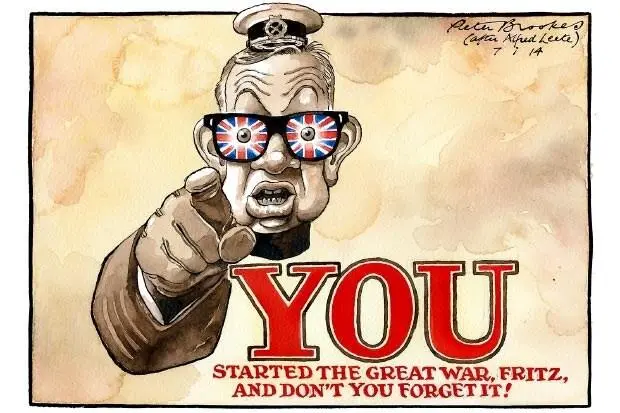
Why Did Germany Lose the Great War?
What put an end to the stalemate which had prevailed on the Western Front in the autumn of 1918? Was it a masterstroke of strategy, war-weariness, the involvement of the USA, or a combination of factors? How did Germans view their defeat in the post-war years?
The people’s racial community was an ideologically-driven concept forming part of a greater Nazi worldview. This article examines the cohesiveness of Nazi beliefs and how they attempted to put them into practice. It also examines how deeply propaganda messages changed (or failed to change) popular opinion.
Nazi Ideology and Senior Business Managers by David White
Nazi ideology’s historical roots predate the founding of the Party in 1920, but contemporary contributions to its thought also developed outside its ranks in the interwar years, notably among Germany’s upper-middle classes. One such grouping was high-ranking managers within German business and industry. This article is an edited version of a talk given to the Open History Society in April 2022.
Gruppe 47 and the Post-WWII German Literary World
by Dr. David White
Gruppe 47 began in 1947 as a circle of German writers who were friends. Several had been prisoners-of-war together in Allied camps. Although never possessing a programmatic statement, from the earliest days they were motivated by political and social concerns.
Ernst Abbe and the Carl Zeiss Jena Company 1876- 1934: Idealism in Practice
Ernst Karl Abbe (1840 –1905) was a German physicist, optical scientist, entrepreneur and social reformer. He became a co-owner of Carl Zeiss AG, a German manufacturer of research
microscopes, astronomical telescopes, planetariums and other optical systems.
Europe
In Animal Farm, George Orwell depicts the revolutionary pigs gradually morphing into two-legged tyrants. Did Stalin become like the tsars – despotic, anti-egalitarian, nationalistic?
Leopold II’s Heart of Darkness
Of all the late nineteenth and early twentieth century European colonial empires, Belgium’s is probably the most notorious for its barbarity. A personal possession of King Leopold II, it was ruthlessly exploited through violence, kidnapping, forced labour and murder.
Napoleon III – The Populist Emperor
Napoleon III, nephew of Napoleon Bonaparte, was a visionary, perhaps even an idealist, who had substantial support among the lower social orders because of his sympathies for the poor and working classes. However, he was also an imperial populist who appealed to both left and right political views, while his ambitions for power demonstrated opportunism and ambiguity.
Was Inter-War Fascism a Political Religion?
Italian Fascism and even more so German National Socialism were extremist ideologies which persuaded millions of their nations’ citizens to accept and approve morally-corrupt political criminality. Urged on by charismatic leaders who were adored and enthusiastically obeyed, vast numbers took part in, or looked on approvingly, as democracy was destroyed, murder was normalised, genocide was undertaken, and war was eagerly pursued for wholly self-aggrandising reasons. What was it in those ideologies that gave them the power to manipulate people so effectively?
USA
Andrew Jackson, seventh president of the United States, is widely regarded as an early populist. But what is populism? Does Donald Trump fit the populist model, and does he bear comparison with either the historical Jackson or the idealised one?
Chiang Kai-Shek and the USA – puppet and puppeteer, but which was which?
Chiang Kai-Shek was a great survivor and a remarkably astute promoter of his own interests. During the Cold War, he manoeuvred skilfully on the international stage and elevated the small island of Taiwan to a status way beyond its power and resources – including a permanent seat on the UN Security Council.
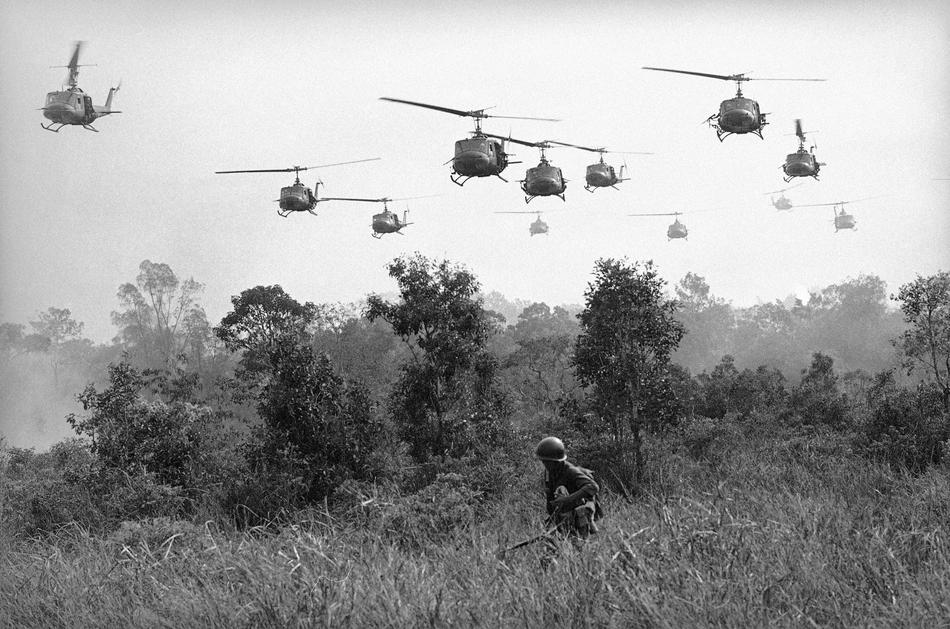
Why Did Lyndon Johnson Escalate the Vietnam War?
Lyndon Johnson inherited the Vietnam War from his predecessor, John Kennedy, but he also inherited the reason for the USA’s “war on communism” from all the administrations from Truman onwards. The domino theory haunted American foreign-policy makers, while Johnson himself was influenced by the belief, born out of his experience of WWII, that you should not appease dictatorships. The author of the Great Society could nor reproduce his domestic triumphs in foreign policy.
Medical Mayhem in the US Civil War?
“The Civil War was fought at the end of the medical Middle Ages” said US historian, James McPherson. Germ theory had not yet been formulated, hygiene in the huge armies was appalling, pain relief was primitive to non-existent, and far more men died of disease than on the battlefield. And the United States was not at all prepared for the huge scale of the conflict which engulfed the nation. Nevertheless the response on the Union side by medical officers, civilians and particularly women was remarkable. Many innovations during the war laid the foundations of future advances in medical care.
The Cherokee Nation during the American Civil War by Dr. David White
Gender Spheres and Circles of Power: How American Women Won the Vote by David White
Achieving women’s suffrage in the USA involved a political movement and campaign whose main task, from its inception, involved challenging an all-encompassing ideological model which laid down the purported proper places of men and women in society, their essential natures, and the consequent activities which were deemed suitable to each.
Miscellaneous
Products Which Changed the World – Sugar and Oil
What impact did the development of these basic commodities have upon society, economics and politics? The vast expansion of the sugar industry coincided with the rise to dominance of Britain as an imperial power, while the technological revolution made possible by petroleum products matched the emergence of the USA as a global power.
Chroniclers, Detectives or Judges – Just What Are Historians?
Is it possible to be truly objective when writing history? Or dispassionate? Should we even aspire to such things? Is judgement a flaw or a virtue in historians?
The Japanese Occupation of China 1937-45: The Divided Opposition and its Consequences
Why did the Japanese succeed in inflicting defeat after defeat upon armies which greatly outnumbered them? How effective was Chiang Kai-Shek at uniting his nation? Japanese ideological views on race and culture are explored to see what underlay their cruelty and barbarism.